
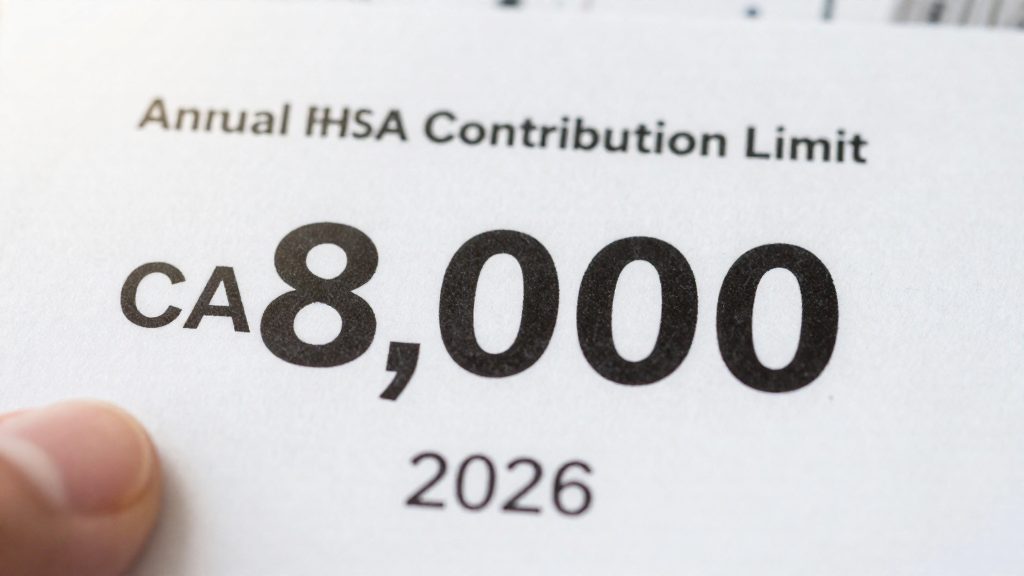
The annual contribution limit for the First Home Savings Account (FHSA) in 2026 is $8,000, according to Investment Executive (9 January 2026). The lifetime limit is $40,000. Unused room can be carried forward to the following year, up to a maximum of $8,000. The Income Tax Act sets these rules (Justice Laws Website, version of 26 March 2026).
What is the annual FHSA contribution limit for 2026?
Annual and lifetime limits
- Annual limit (2026): $8,000
- Lifetime limit: $40,000, across all years of participation
How available room is calculated
The Income Tax Act defines the room for a given year with this formula:
Room = $8,000 + D − (E − F)
- D is the carry-forward from the previous year. It is the lesser of $8,000 and an amount calculated from the prior year’s room. It is zero if the maximum participation period had not started before the year in question.
- E and F appear in the formula, but the source excerpt used here does not define them, so they are not explained in this section.
| Component | Value | Condition |
|---|---|---|
| Base annual room | $8,000 | Applies to 2026 |
| Carry-forward (D) | Lesser of $8,000 and a prior-year-based amount | Zero if the maximum participation period had not begun before that year |
| Lifetime cap | $40,000 | Total across all years |
Contribution deadline and tax treatment
Contributions must be made by 31 December of the year they apply to. Unlike an RRSP, FHSA contributions cannot be attributed to the following year. Contributions are tax-deductible.
Lifetime limit of $40,000
The FHSA lifetime limit is $40,000, and it caps the total deductions an account holder can claim across all years. The $8,000 annual limit is the yearly ceiling. The lifetime figure applies to the running total. At the standard $8,000 per year, reaching $40,000 takes five years of maximum contributions, provided no carry-forward room is used.
How the lifetime cap works with carry-forward
The Income Tax Act sets contribution room using the formula “8,000 + D − (E − F).” The term D is the carry-forward, which is the lesser of $8,000 and an amount calculated from the prior year’s room. D is zero if the maximum participation period had not begun before the year in question. Room does not accumulate before the account opens, so the opening year provides $8,000 of room and nothing earlier.
Carry-forward changes how quickly the cap is reached. It does not change the cap itself. Unused room can add up to $8,000 in a given year, but total deductions still stop at $40,000.
Illustrative five-year path
The table below assumes the full $8,000 is contributed and deducted each year, with no carry-forward used.
| Year | Deduction in year | Cumulative deductions |
|---|---|---|
| 1 (opening year) | $8,000 | $8,000 |
| 2 | $8,000 | $16,000 |
| 3 | $8,000 | $24,000 |
| 4 | $8,000 | $32,000 |
| 5 | $8,000 | $40,000 |
Tracking method
- Record the year the account was opened, since room starts that year.
- Log each contribution and the deduction claimed for it, by calendar year.
- Add each year’s deduction to the running total.
- Before contributing in a later year, check the unused room carried forward from the previous year.
- Stop claiming deductions once the cumulative total reaches $40,000.
How does unused contribution room carry forward?
Unused FHSA contribution room carries into the next calendar year, but only up to a fixed cap. The table below sets out the rules from the sources, with their dates.
| Rule | Detail | Source (date) |
|---|---|---|
| Annual contribution limit, 2026 | $8,000 | Investment Executive (2026-01-09) |
| Lifetime contribution limit | $40,000 | Investment Executive (2026-01-09) |
| Contribution deadline | 31 December of the tax year | Investment Executive (2026-01-09) |
| Carry-forward cap | Up to $8,000 of unused room | Investment Executive (2024-06-28) |
| Room in the opening year | $8,000 | Investment Executive (2024-06-28) |
| Room before account opening | None accrues | Investment Executive (2024-06-28) |
The carry-forward amount (D in the statutory formula) is the lesser of $8,000 and an amount calculated from the previous year’s room. The Income Tax Act expresses the year’s participation room as “$8,000 + D − (E − F)”. The variables E and F are defined in the Act and are not detailed in the available sources, so the exact result depends on figures the sources do not provide.
Two conditions limit the carry-forward. First, D is nil if the maximum participation period had not begun before the year in question. The sources do not define that period, so check your account opening date against it. Second, total deductions are capped at $40,000 over the account’s life, regardless of carried-forward room.
Because the formula adds carry-forward room on top of the $8,000 annual limit, the room available in a given year can exceed $8,000. The actual figure depends on the (E − F) term, which the sources do not quantify.
Contribution deadline: 31 December
FHSA contributions must be made no later than 31 December of the calendar year. Unlike RRSP contributions, they cannot be attributed to the following year. A contribution made on 1 January counts toward the new year’s room, not the previous one. FHSA contributions are tax-deductible in the year they are made (Investment Executive, 2026-01-09).
| Rule | Detail | Source |
|---|---|---|
| Last day to contribute | 31 December of the year | Investment Executive, 2026-01-09 |
| Attribution to prior year | Not permitted, unlike RRSP | Investment Executive, 2026-01-09 |
| Tax treatment | Contributions are deductible from income | Investment Executive, 2026-01-09 |
| Unused room carry-forward | Up to 8,000 $ into the next year | Investment Executive, 2024-06-28 |
The carry-forward of unused room is set by the Income Tax Act. The formula is 8,000 + D − (E − F). The term D is the lesser of 8,000 and an amount based on the previous year’s room. D is zero if the maximum participation period had not started before that year. The total deduction is capped at 40,000 $ over the account’s lifetime (Justice Laws Website, Government of Canada, 2026-03-26).
To make the deadline work in practice, check your contribution total in late December rather than waiting for the last day. Keep the transaction confirmation dated 31 December or earlier, since that date determines which year the contribution falls in.

Tax deduction of FHSA contributions
Contributions to a First Home Savings Account (FHSA) are tax-deductible, which reduces taxable income for the year they are made. The deduction is capped by the account’s contribution room, which is set each year and over the account’s lifetime.
| Rule | Figure (source and date) |
|---|---|
| Annual contribution limit, 2026 | 8,000 $ (Investment Executive, 2026-01-09) |
| Lifetime contribution limit | 40,000 $ (Investment Executive, 2026-01-09) |
| Deadline for contributions | 31 December of the tax year (Investment Executive, 2026-01-09) |
| Maximum carried-forward unused room | 8,000 $ (Investment Executive, 2024-06-28) |
| Room granted in the opening year | 8,000 $ (Investment Executive, 2024-06-28) |
Contribution room is calculated under the Income Tax Act using the formula “8,000 + D − (E − F)”. D is the carry-forward: it is the lesser of 8,000 and an amount based on the previous year’s room. It is zero if the maximum participation period had not begun before that year. E and F are terms defined in the Act; the source material does not detail them, so this section does not calculate them.
The lifetime cap of 40,000 $ limits the total deduction across all years, even if unused room remains.
Unlike an RRSP, FHSA contributions cannot be attributed to the previous tax year, so the deadline is 31 December. Contributions made up to 31 December count toward that year’s room.
Withdrawal rules are outside the scope of this article.
What the Income Tax Act Says
The Income Tax Act sets FHSA contribution room (called CELIAPP in French) through a formula, not only a fixed annual cap. For 2026, the annual limit is $8,000 and the lifetime limit is $40,000 (Investment Executive, 2026-01-09). The Act’s carry-forward rule determines how much room is available in a given year.
| Rule | Value in the source |
|---|---|
| Annual contribution limit, 2026 | $8,000 |
| Lifetime contribution limit | $40,000 |
| Contribution deadline | 31 December |
| Carry-forward of unused room | Up to $8,000 to the following year |
| Room in the opening year | $8,000 |
| Room accrued before opening | None |
| Tax treatment of contributions | Deductible from income tax |
Room for a given year is calculated as: 8,000 + D − (E − F). The carry-forward amount (D) is the lesser of $8,000 and an amount calculated from the previous year’s room. D is zero if the maximum participation period had not begun before the year in question. The total deduction is capped at $40,000.
To confirm their meaning, consult the full text of the Act on the Justice Laws Website (Government of Canada), which was consulted for this summary on 2026-03-26.
Unlike an RRSP, a contribution made after 31 December cannot be applied to the previous tax year. The deadline is therefore fixed, and unused room is the only element that moves forward.
Where to check your contribution room
Your FHSA contribution room is set by the Income Tax Act, not by a single annual figure. The sources give three benchmarks to check against: an annual limit of $8,000 in 2026, a lifetime limit of $40,000, and a rule that unused room carries forward by up to $8,000 per year. Your personal room depends on the year you opened the account and on any unused room from earlier years.
Primary reference: the Income Tax Act
The Act states the participation room as 8,000 + D − (E − F). D is the carry-forward: the lesser of $8,000 and an amount calculated from the previous year’s room. D is zero if the maximum participation period had not begun before the year in question. The total deduction is capped at $40,000. Read the definitions of E and F in the statute text (Justice Laws Website, Government of Canada, 2026-03-26).
Verification steps
- Confirm the opening year. The year the account is opened gives $8,000 of room, and no room accrues before opening.
- Add carried-forward room. Unused room from the previous year carries forward, up to $8,000.
- Apply the formula for the current year using the Act’s definitions of E and F.
- Check the lifetime total against the $40,000 cap.
- Check the deadline. Contributions for a given year must be made by 31 December.
| Benchmark | Value | Source (dated) |
|---|---|---|
| Annual limit, 2026 | $8,000 | Investment Executive, 2026-01-09 |
| Lifetime limit | $40,000 | Investment Executive, 2026-01-09 |
| Maximum carry-forward | $8,000 | Investment Executive, 2024-06-28 |
| Room in opening year | $8,000 | Investment Executive, 2024-06-28 |
| Contribution deadline | 31 December | Investment Executive, 2026-01-09 |
Frequently asked questions
How much can I put into an FHSA in 2026?
The annual contribution limit for a First Home Savings Account in 2026 is $8,000. Deposits count toward a given tax year only if they are made by 31 December, because unlike an RRSP contribution they cannot be assigned to the following year.
What happens to contribution room I don’t use in one year?
Unused room carries forward to the next year, but the carried amount is capped at $8,000 and is calculated from the prior year’s room, so it can be smaller. The year you open the account gives you $8,000 of room, and no carry-forward room builds up before the account is opened.
Do FHSA contributions reduce my taxable income, and is there a total ceiling?
Contributions are tax-deductible, but the total deductions you can claim across all years cannot exceed $40,000. The $8,000 annual figure and the $40,000 lifetime cap therefore act as two separate limits you must track together.